Entry · Ref JJAEBXYF
Can Dental Crowns Replace Missing Teeth?
- Posted
- 2026-10-27
- Last amended
- 2026-10-27
- Account
- @griffinyazh940
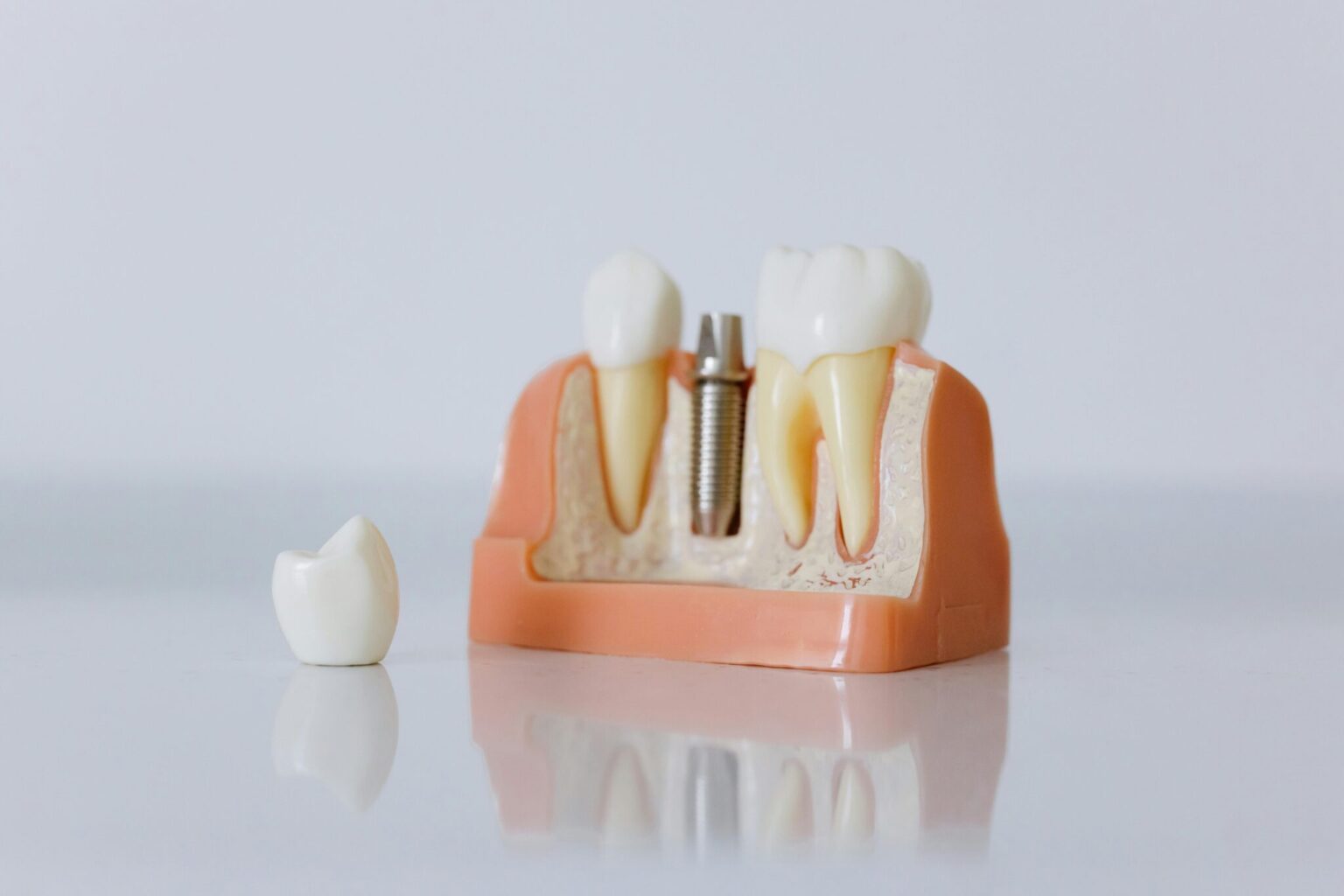
The short answer is no, not by themselves.
A dental crown can rebuild a tooth that still has a root and enough structure to support a restoration. It can cover a cracked tooth, strengthen one after a root canal, or restore shape and function when a large filling is no longer enough. What a crown cannot do is stand alone in empty space where a tooth is completely gone. If the entire tooth is missing, including the root, a crown needs something to attach to. That support might come from a dental implant, or from neighboring teeth in the case of a bridge, but the crown itself is only the visible top portion.
This distinction matters because people often use the term loosely. In everyday conversation, someone may say, “I need a crown to replace my tooth,” when what they really mean is that they need some form of tooth replacement, and the final visible part will look like a crown. In a dental office, that wording can create confusion. The treatment choices, cost, timeline, and long-term maintenance differ quite a bit depending on whether the missing tooth is replaced with an implant crown, a bridge, or, in some cases, a removable partial denture.
Understanding where dental crowns fit into the picture helps patients ask better questions and avoid the disappointment of expecting the wrong procedure.
What a dental crown actually does
A crown is a custom-made cap that fits over a prepared tooth or over an implant abutment. Its job is to restore form, strength, and chewing function. When done well, it also blends with neighboring teeth so naturally that most people cannot spot it.
In clinical practice, crowns are among the most versatile tools in restorative dentistry. They are commonly used when a tooth has lost too much structure for a filling to hold up reliably. A tooth with a large fracture line, a worn-down bite surface, or extensive decay often reaches that threshold. After root canal treatment, back teeth especially tend to become more brittle over time, and a crown is often recommended to protect them from splitting under chewing pressure.
That is very different from replacing a tooth that has already been extracted or lost. Once a tooth is missing, the dentist is no longer restoring an existing foundation. A new foundation must be created or borrowed. That is where treatment planning becomes more nuanced.
Why people think crowns replace missing teeth
The confusion is understandable. Many tooth replacement options involve a crown somewhere in the final design.
If you receive a dental implant, the part you see above the gum is usually a crown. If you receive a traditional bridge, the false tooth in the middle is often made as part of a multi-unit crown restoration connected to crowns on the adjacent teeth. Even in some advanced full-mouth reconstructions, the visible biting surfaces are crown-like restorations attached to implants or natural teeth.
So when patients hear “you’ll get a crown,” they may assume the crown itself is the replacement. In reality, the crown is the visible restoration, not the entire support system.
A simple way to think about it is this: a crown needs a base. If the tooth is still present, the base is the prepared tooth. If the tooth is missing, the base has to come from an implant or another prosthetic design.
When a missing tooth can involve a crown
There are two common situations where crowns are part of replacing a missing tooth. One is an implant-supported crown. The other is a dental bridge.
With an implant-supported crown, a titanium or ceramic implant is placed in the jawbone where the root used to be. After healing, a connector called an abutment is attached, and then a crown is secured on top. The crown looks and functions like a natural tooth, but it is only the top part of the system.
With a bridge, the dentist prepares the teeth on either side of the gap. Crowns are placed over those supporting teeth, and a false tooth is suspended between them. In that case, the replacement is a joined structure. Again, the crowns are essential, but they are not independently replacing the missing tooth.
This may seem like a semantic point, but it affects real choices. An implant crown does not rely on neighboring teeth for support. A bridge does. A crown on a badly damaged but still salvageable tooth may preserve a natural root. Extracting that tooth and replacing it later with an implant crown is a different path entirely.
The situations where a crown might save a tooth instead of replacing it
Sometimes the better question is not whether a crown can replace a missing tooth, but whether a crown can prevent one from becoming missing.
This comes up often with cracked molars, teeth with large failing fillings, or teeth that have had root canal treatment. Patients may arrive thinking extraction is inevitable because the tooth hurts or because a large piece broke off. In many cases, if the root is healthy and the fracture does not extend too far below the gumline, a crown can rescue that tooth.
That matters because preserving a natural tooth, when realistic, is usually worth serious consideration. Natural teeth transmit force in a way the body recognizes, and keeping them helps maintain bone and bite relationships. A crown does not make a compromised tooth brand new, but it can give a structurally weakened tooth years of additional service.
Dental CrownsI have seen patients come in convinced they had “lost” a tooth because most of the visible crown fractured away while chewing on something hard. Clinically, though, the root remained intact, the tooth could be treated, and a crown restored full function. To the patient, it felt like a replacement. From a dental standpoint, it was a salvage procedure.
That distinction can save money, shorten treatment time, and avoid surgery.
If the tooth is truly gone, what are the real options?
Once a tooth is fully missing, the conversation shifts from restoration to replacement. The best option depends on several factors: how long the tooth has been missing, the condition of the surrounding teeth and bone, the patient’s bite, health history, budget, and preferences about surgery and maintenance.
The main approaches include:
- an implant with a crown
- a traditional fixed bridge
- a removable partial denture
- sometimes no replacement, depending on the tooth and the bite
An implant with a crown is often considered the closest stand-in for a natural tooth because it replaces both the root support and the visible chewing surface. A bridge can be a strong solution when the adjacent teeth already need crowns or when implant placement is not ideal. A removable partial denture is less expensive in many cases, though it feels different and typically offers less stability.
There are also situations where a missing tooth, especially a second molar far in the back, may not need immediate replacement if the bite is stable and the patient functions well. That decision requires judgment. It should not be made casually, but it is not always wrong to monitor rather than rush into treatment.
Implant crowns, what patients often like and what they should know
When people picture a single missing tooth being replaced, they are usually imagining an implant crown. That popularity is not just marketing. Implant-supported crowns have real strengths.
They do not require grinding down healthy neighboring teeth. They can preserve bone better than leaving an empty space, although bone behavior varies from person to person. They feel quite independent in the mouth once healed, and patients often appreciate being able to floss around them similarly to a natural tooth, with a few technique adjustments.
Still, implant treatment is not automatic or perfect.
Placement usually requires enough bone width and height. If the tooth has been missing for years, the ridge may have shrunk, and grafting may be recommended. Healing takes time. In straightforward cases, some treatment plans move relatively quickly, while others stretch over several months. The front of the mouth can be especially demanding because small cosmetic discrepancies are noticeable there. Tissue shape, smile line, and neighboring tooth position all matter.
An implant crown can also fail if bite forces are poorly managed or home care is neglected. The crown may chip, the screw may loosen in some systems, and the gum around the implant can become inflamed if plaque accumulates. Patients sometimes think of implants as maintenance-free because they “cannot get cavities.” That is a costly misconception. They can still develop peri-implant problems, and cleaning around them is essential.
Bridges still have an important place
Bridges are sometimes dismissed too quickly, usually because implants get most of the attention. Yet in daily practice, a well-planned bridge can be a very sensible option.
If the teeth on either side of a missing tooth already have large fillings, cracks, or old crowns that need replacement, using them as bridge supports may be efficient. A bridge can often restore function in a shorter timeframe than an implant case, especially when surgery or grafting would complicate treatment. Some patients also prefer to avoid surgical procedures for medical, emotional, or financial reasons.
The trade-off is that bridge preparation asks something of the neighboring teeth. Healthy enamel is removed so crowns can fit properly. Bridges also change cleaning routines. The area beneath the replacement tooth must be cleaned with floss threaders, specialized brushes, or water irrigation devices. Patients who do not adapt well to those habits can develop decay or gum problems around the supporting teeth.
I have seen bridges serve patients beautifully for well over a decade when the fit was good, the bite was balanced, and home care was consistent. I have also seen them fail early when one supporting tooth was a poor candidate from the start. The quality of planning matters at least as much as the type of restoration.
Why a crown cannot simply be “attached to the gums”
This question comes up more often than many people realize. Patients see the visible shape of a crown and understandably wonder why a dentist cannot just secure one in the empty space.
The reason is mechanical and biological. Teeth handle significant forces every day. Even gentle chewing generates repeated pressure. Sticky foods pull in multiple directions. Nighttime clenching can multiply force dramatically. A crown has to anchor to something rigid enough to tolerate those loads.
Gum tissue alone cannot do that. It is soft tissue, not a structural foundation. Without a root, implant, or bridge support, a crown would have no stable way to function. It would move, detach, irritate tissue, and fail almost immediately.
Jawbone needs stimulation as well. Natural roots provide that stimulation through chewing. Implants can approximate it to a degree. A crown sitting on soft tissue would not.
Cost often drives the question, and that is reasonable
For many patients, the appeal of “just a crown” is financial. Crowns are familiar. Implants and bridges can sound more complex and expensive, and they usually are.
It helps to separate the visible restoration from the full treatment. A single implant case includes more than a crown. It may involve imaging, surgical placement, healing visits, an abutment, the final crown, and occasionally grafting. A bridge may involve multiple crowns fused together, rather than one crown. A removable option may cost less upfront but feel less natural and need replacement or adjustment more often.
The least expensive option initially is not always the least expensive over time. On the other hand, the most advanced option is not always the wisest use of resources in every mouth. Someone with heavy grinding, poor gum stability, or limited commitment to maintenance may not benefit from the most elaborate plan.
Good dentists do not just name the ideal option in the abstract. They weigh what is clinically sound, financially realistic, and maintainable for that specific person.
The role of bone loss and timing
One practical detail that often gets overlooked is timing. After a tooth is removed, the surrounding bone begins to remodel. Some degree of shrinkage is expected, especially in the first several months. That does not mean every delayed case becomes impossible, but it can change the treatment.
In the front of the mouth, even a few millimeters of tissue and bone change can affect appearance. In the back, those changes may be less visible but still influence implant placement and spacing. This is one reason dentists sometimes discuss socket preservation or bone grafting at the time of extraction. They are not trying to oversell a procedure. They are often trying to preserve future options.
If someone loses a tooth and plans to replace it eventually, an early consultation is useful even if treatment must wait. Knowing the likely path ahead can prevent surprises later.
How dentists decide whether to crown a compromised tooth or extract it
This is where experience shows. Two teeth can look similarly damaged to a patient and require completely different decisions.
Dentists usually consider several factors in combination:
- how much healthy tooth structure remains above and below the gumline
- whether the root is cracked, infected, or too short to support long-term function
- gum and bone support around the tooth
- bite forces, grinding habits, and location in the mouth
- the patient’s goals, budget, and ability to maintain the restoration
A heavily broken tooth with a solid root and favorable bone levels may be a strong candidate for a crown, sometimes with a core buildup or post depending on the situation. A tooth with a vertical root fracture, deep decay extending too far under the gum, or severe mobility usually has a poor long-term prognosis no matter how attractive a crown might look at delivery.
Patients sometimes push for “saving it at all costs.” Sometimes that is appropriate. Sometimes it leads to a cycle of retreatment and frustration. A tooth that can only be restored by stretching biology and mechanics beyond reason may become more expensive and more uncomfortable than replacing it sooner.
Cosmetic expectations deserve an honest conversation
When people ask whether Dental Crowns can replace missing teeth, they are often thinking not just about chewing, but about appearance. That is especially true for front teeth.
A crown can look excellent, but esthetics depend on more than the crown material or shade tab. The gumline, the contour of the tissue between teeth, the thickness of the tissue, the smile line, and the color of adjacent teeth all influence the result. Matching one front tooth to a natural neighbor can be among the most demanding tasks in dentistry.
An implant crown in the front can be highly successful, but it is less forgiving than many expect. If the tissue architecture is already compromised from trauma, infection, or years of bone loss, recreating a perfectly natural look becomes more difficult. A bridge can sometimes provide better control of the visible emergence profile in certain cases, though it has its own trade-offs.
This is where photographs, models, and temporary restorations become valuable. Good cosmetic dentistry is rarely about speed. It is about controlling small details that most people only notice when they go wrong.
Questions worth asking before you decide
If you are trying to sort out whether a crown, bridge, or implant is appropriate, the quality of the consultation matters as much as the final recommendation. Ask your dentist what exactly is being restored, what is supporting it, and what the alternatives would mean over five to ten years.
It is also reasonable to ask what could make the recommended option fail sooner. That answer often reveals more than the sales pitch for benefits. A trustworthy clinician should be able to explain why a tooth can be saved, why it cannot, or why one replacement option suits your mouth better than another.
Patients are often relieved when they hear a nuanced answer. Dentistry is full of gray areas. There is rarely one universally correct option. There is usually a best fit for the circumstances.
The practical answer
Dental crowns do not replace missing teeth on their own. They restore teeth that still exist, or they serve as the visible top portion of a larger tooth replacement system such as an implant or bridge.
That may sound like a technical distinction, but it shapes every part Dental Crowns Omni Dental Specialty of treatment. If your tooth is damaged but still restorable, a crown may save it. If the tooth is truly missing, a crown will still likely be part of the final result, but it will need support from something else. Knowing that helps you move past vague terminology and focus on the real decision, which is not “Do I need a crown?” but “What is the best way to support a long-lasting replacement in my mouth?”
For some people, that answer is an implant crown. For others, it is a bridge. For a few, it may be preserving the existing tooth with a crown before extraction becomes necessary. The right choice comes from careful examination, realistic expectations, and a plan that respects both biology and daily life.
Omni Dental Specialty
1690 E Gonzales Rd, Oxnard, CA 93036, United States
+1 805-410-9603
FAQ About Dental Crowns
How long do crowns last on teeth?
A dental crown often lasts about five to fifteen years, although some last longer. Material, the underlying tooth, oral hygiene and grinding habits affect longevity. Regular dental examinations help identify wear, decay or a loose crown; no lifespan is guaranteed.
How much does a tooth crown cost?
There is no single price for every crown. Material, laboratory work, the condition of the tooth and any additional treatment affect the fee. Ask for a written estimate and confirm your insurance benefits, exclusions and out-of-pocket costs before treatment.
What is the downside of crowns on teeth?
A conventional crown usually requires irreversible removal of some tooth structure. Possible problems include sensitivity, chipping, loosening and decay at the crown margin; some teeth later need root canal treatment. Discuss your tooth's condition, material choices and suitable alternatives with your dentist.